



GCC Railway Arrives in 2030 to Reshape Gulf Travel
The long-awaited vision for seamless, high-speed rail travel across the Gulf Cooperation Council (GCC) is no longer a blueprint. Driven by new bilateral agreements and accelerated national projects, the unified GCC Railway Project is firmly targeting a December 2030 launch. This

The long-awaited vision for seamless, high-speed rail travel across the Gulf Cooperation Council (GCC) is no longer a blueprint. Driven by new bilateral agreements and accelerated national projects, the unified GCC Railway Project is firmly targeting a December 2030 launch.
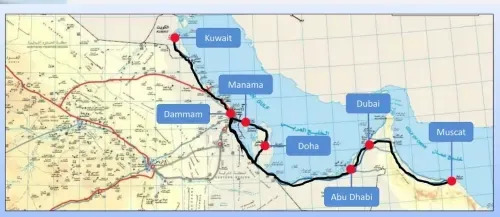
This massive infrastructure undertaking is set to revolutionise regional mobility, providing a fast, sustainable, and integrated alternative to air and road travel. As key segments rapidly take shape, here is a detailed look at the new cross-border corridors that will redefine connectivity across the Gulf.
1. UAE – Oman (Hafeet Rail)
The Hafeet Rail project represents a foundational step in integrating the GCC network, connecting two nations through a single, advanced rail line.
The Route: This 238 km corridor connects the UAE's existing Etihad Rail network at Al Ain with Oman's strategically vital Sohar Port.
Passengers will benefit from an efficient, high-speed alternative to driving, with trains capable of reaching up to 200 km/h between major centers such as Abu Dhabi, Al Ain, and Sohar. Designed for both passenger and freight, this integrated approach is crucial for boosting cross-border trade and logistics efficiency, laying the groundwork for future regional links.
2. Riyadh – Doha High-Speed Rail
Marking a major leap in connectivity, the new high-speed electric railway between Saudi Arabia and Qatar is arguably the most dynamic bilateral project.
Lightning Speed: Trains on this line are engineered to operate at speeds exceeding 300km/h
Time Saved: The 785km journey between the two capitals is expected to be reduced to approximately just two hours, a game-changer for business and tourism.
The route strategically links major aviation hubs: King Salman International Airport (Riyadh) and Hamad International Airport (Doha), creating a rapid, multi-modal travel option for international travellers.
Timeline: This ambitious line is set to launch within six years of the recent formal agreement.
3. Saudi Arabia – Kuwait Railway Link
Establishing a new vital artery for both passengers and goods, this northern connection is moving swiftly through its development phases.
The Line: This 650km railway will establish a direct corridor connecting Al Shadadiya in Kuwait’s Al Farwaniya governorate to the Saudi capital, Riyadh.
Schedule: Construction is scheduled to break ground in 2026 and aims for a quick completion target by 2028, bringing its operational launch ahead of the 2030 network deadline.
The line is specifically designed for the transport of both people and goods, maximising its economic and logistical impact across the new corridor.
4. Saudi Arabia – Bahrain (King Hamad Causeway Rail)
This project offers an innovative solution to connect the island nation of Bahrain seamlessly with the continental GCC network.
The Link: A 57km railway segment, featuring two rail tracks, will run across the new King Hamad Causeway, linking Dammam to the new King Hamad International Station in Ramli, Bahrain.
Seamless Integration: The Ramli station is strategically positioned to connect directly to the proposed Bahrain Metro and Bahrain International Airport.
This design ensures passengers can travel effortlessly across the border and plug straight into Bahrain’s domestic public transport system, maximising convenience and ease of cross-border travel.
The mosaic of these bilateral projects, from the 300 km/h dash between Riyadh and Doha to the integrated transport chain of the Hafeet Rail and the metro connections in Bahrain, signals a fundamental shift in how the Gulf operates.