




Gold Slips as Yields Rise
A stronger dollar and higher Treasury yields weigh on gold, while weaker U.S. jobs data reduces expectations of an October rate.
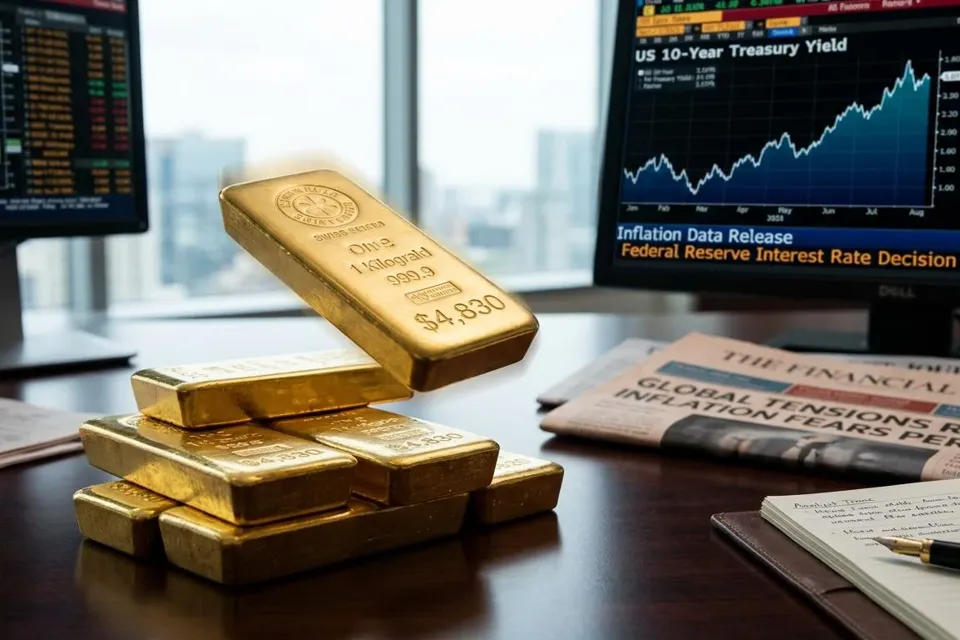
Gold slipped 0.3% to $4,127.87 an ounce on Tuesday.
U.S. Treasury yields reached their highest levels in about 24 years.
Weaker U.S. jobs data has reduced expectations of a Fed hike in October.
Gold is being pulled in opposite directions: rising U.S. Treasury yields and a stronger dollar are pressuring prices, while weaker U.S. economic data is reducing expectations of another Federal Reserve interest rate increase this month.
Spot gold fell 0.3% to $4,127.87 per ounce, while U.S. gold futures were little changed at around $4,155.30.
The latest movement highlights the competing forces currently shaping the gold market. Higher Treasury yields make interest-bearing assets more attractive compared with gold, which does not pay interest. At the same time, a stronger dollar makes dollar-priced gold more expensive for investors using other currencies.
Fed Outlook Provides Some Support
Gold has received some support from changing expectations for U.S. monetary policy.
U.S. job growth slowed more than expected in September, while payroll figures for the previous two months were revised lower. The weaker labor-market data has reduced expectations of a Federal Reserve rate increase in October.
However, markets continue to expect another increase later in the year. Traders are currently pricing an 87% probability of a December rate hike, according to the CME FedWatch Tool.
This leaves gold in a difficult position. A more cautious Fed could support bullion, while higher rates and yields continue to increase the opportunity cost of holding the non-yielding metal.
Bond Yields Remain a Major Pressure
The bond market is another major factor influencing gold.
The 10-year and 30-year U.S. Treasury yields recently reached 24-year highs, reflecting continued pressure in the bond market. Rising yields have traditionally weighed on gold because investors can obtain greater returns from interest-bearing assets.
Yet the relationship may not remain straightforward. Concerns about government debt, borrowing costs and purchasing power could eventually strengthen gold's appeal as a safe-haven asset.
Geopolitical Risks Could Support Gold
Despite the short-term pressure, analysts say gold's longer-term fundamentals remain supportive.
Geopolitical tensions in the Middle East, including developments around Yemen's Bab el-Mandeb Strait, could encourage investors to seek safer assets. Reuters quoted Capital.com analyst Kyle Rodda as saying geopolitical risk in the Middle East could become a major catalyst for gold.
The combination of geopolitical uncertainty, concerns over government debt and continued central-bank demand has helped keep gold prices elevated despite higher bond yields.
Other Precious Metals
Other precious metals also moved lower on Tuesday.
Spot silver fell 0.7% to $60.64 an ounce, while platinum declined 0.7% to $1,709.75. Palladium also slipped 0.7% to $1,164.24.
For gold, investors will continue watching U.S. economic data, Treasury yields and Federal Reserve policy expectations for clues about the metal's next major move.

Sadiq Mohsen
NOB Reporter