




AI Speeds Skin Cancer Checks
Bradford dermatology team says AI is reducing waiting times and helping doctors assess suspicious skin lesions faster.
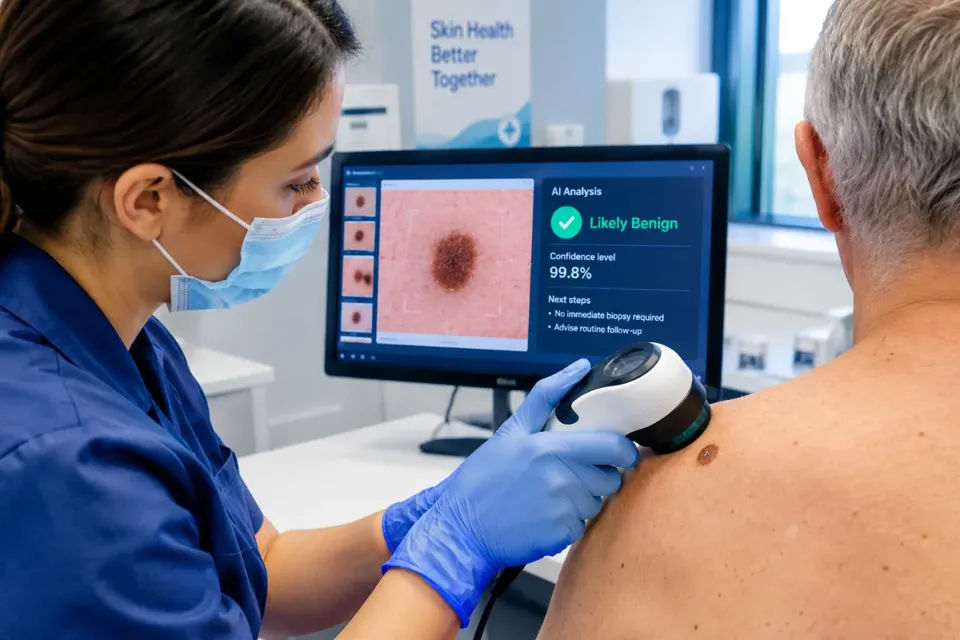
AI has helped reduce unnecessary skin biopsies by about 10% at an NHS clinic in Bradford.
The technology allows the clinic to see 32 patients per session, compared with 24 previously.
Every AI assessment is double-checked by a clinician before patients are discharged or referred for further treatment.
An NHS dermatology clinic in Bradford has reported a 10% reduction in unnecessary skin biopsies since introducing artificial intelligence to assess suspicious moles and skin lesions.
The dermatology team at St Luke's Hospital began using the AI system in April to help examine potentially cancerous skin lesions. Staff say the technology has improved patient waiting times and reduced unnecessary investigations.
The system, known as DERM, or Deep Ensemble for the Recognition of Malignancy, analyses photographs of suspicious lesions within minutes.
A healthcare assistant takes three photographs of a mole or lesion before uploading the images to the system. Patients whose cases appear benign can receive advice and be discharged, while suspicious cases are referred to a specialist through a one-stop clinic.
The clinic can now see 32 patients during each session, compared with 24 before the AI system was introduced.
Consultant plastic surgeon Mr Zakir Shariff said the technology had made a significant difference to the department, particularly by reducing bottlenecks affecting patients and clinicians.
He said the system was particularly effective at quickly identifying non-cancerous cases, helping patients avoid unnecessary investigations.
The company behind DERM, Skin Analytics, says its technology is 99.9% accurate at ruling out melanoma cases. However, doctors at Bradford continue to check every image and AI assessment to ensure patients receive the appropriate diagnosis and follow-up.
The approach was demonstrated in the case of 73-year-old Laurence Patten, who was urgently referred after his GP noticed a suspicious mole on his back.
Patten has multiple myeloma and a previous history of skin cancer. Although the AI system flagged his mole as suspicious, a specialist examination indicated that it was likely benign.
The mole will be removed and tested to confirm the diagnosis.
Patten said he was pleased with how quickly he had been assessed, adding that receiving an early answer had eased his concerns.
Dr Nader Ghaderi, an associate specialist in dermatology, said the AI had been right to flag Patten's case for further examination.
He explained that without the AI assessment, a doctor would likely have arranged a biopsy or follow-up because of the lesion's appearance.
The Bradford experience highlights how AI can be used as a support tool for doctors, helping hospitals handle more patients while potentially reducing unnecessary procedures.

Sadiq Mohsen
NOB Reporter